Women Economic Empowerment Africa (WEEA) is an Ethiopian nonprofit organization committed to advancing women’s and girls’ empowerment through community-centered programs, menstrual health initiatives, education, advocacy, and sustainable solutions.
Organizational Overview
Who We Are
Our work responds to interconnected challenges affecting women and girls, including menstrual health barriers, unequal access to opportunities, limited resources, and social and economic inequalities.
We believe empowerment requires more than awareness alone. It requires access to information, practical resources, supportive communities, meaningful participation, and opportunities to shape the decisions that affect people’s lives.
Through collaboration with communities and partners, WEEA works to strengthen dignity, inclusion, resilience, and opportunity.
WEEA works to address social and economic barriers affecting women and girls through integrated programmes in economic empowerment, entrepreneurship, skills development, menstrual health and dignity, education, youth leadership, research, advocacy, and community engagement.
The organization believes that women and girls must be active participants, leaders, and decision-makers in social and economic development.
We believe sustainable change begins with listening to communities, understanding their priorities, and working together to develop solutions that are accessible, relevant, and lasting.
Our Story
WEEA was founded to address poverty and expand social and economic opportunities for women and girls in Africa.
Youth leadership on decent work
The Major Group for Children and Youth announced Mahlet Zeleke, representing Women Economic Empowerment Africa Youth Organisation, as a Global Focal Point for its Global Youth Caucus on Decent Work and Sustainable Economies.
A society where women and girls live with dignity, equality, opportunity, and the freedom to realize their full potential.
Our Mission
To empower women and girls through menstrual health and dignity, education, economic opportunity, advocacy, and sustainable community-based solutions.
Equality
We support fair access to opportunities, resources, and participation.
Inclusion
Meaningful participation of women, girls, youth, persons with disabilities, and marginalized communities.
Accountability
We value responsible resource use, transparency, learning, and meaningful results.
Innovation
Creative and practical responses to development challenges.
Sustainability
We promote solutions that respond to immediate needs while supporting lasting benefits.
Collaboration
Partnerships that strengthen development outcomes.
Integrity
Ethical conduct, honesty, and professionalism.
Dignity
Every woman and girl deserves respect, privacy, and the opportunity to live with confidence.
Empowerment
We work to strengthen the knowledge, capabilities, and agency of women and girls.
Community Partnership
We value local knowledge, participation, and collaboration.
Our Approach
Our Commitment
WEEA is committed to working alongside communities and partners to develop practical responses to the challenges facing women and girls. We recognize that lasting progress requires collaboration, respect for local realities, and continued learning.
Community-based programming
Skills development and entrepreneurship
Education and menstrual health
Evidence-based advocacy
Youth participation and leadership
Strategic partnerships
Monitoring, evaluation, accountability, and learning
WEEA in the Community
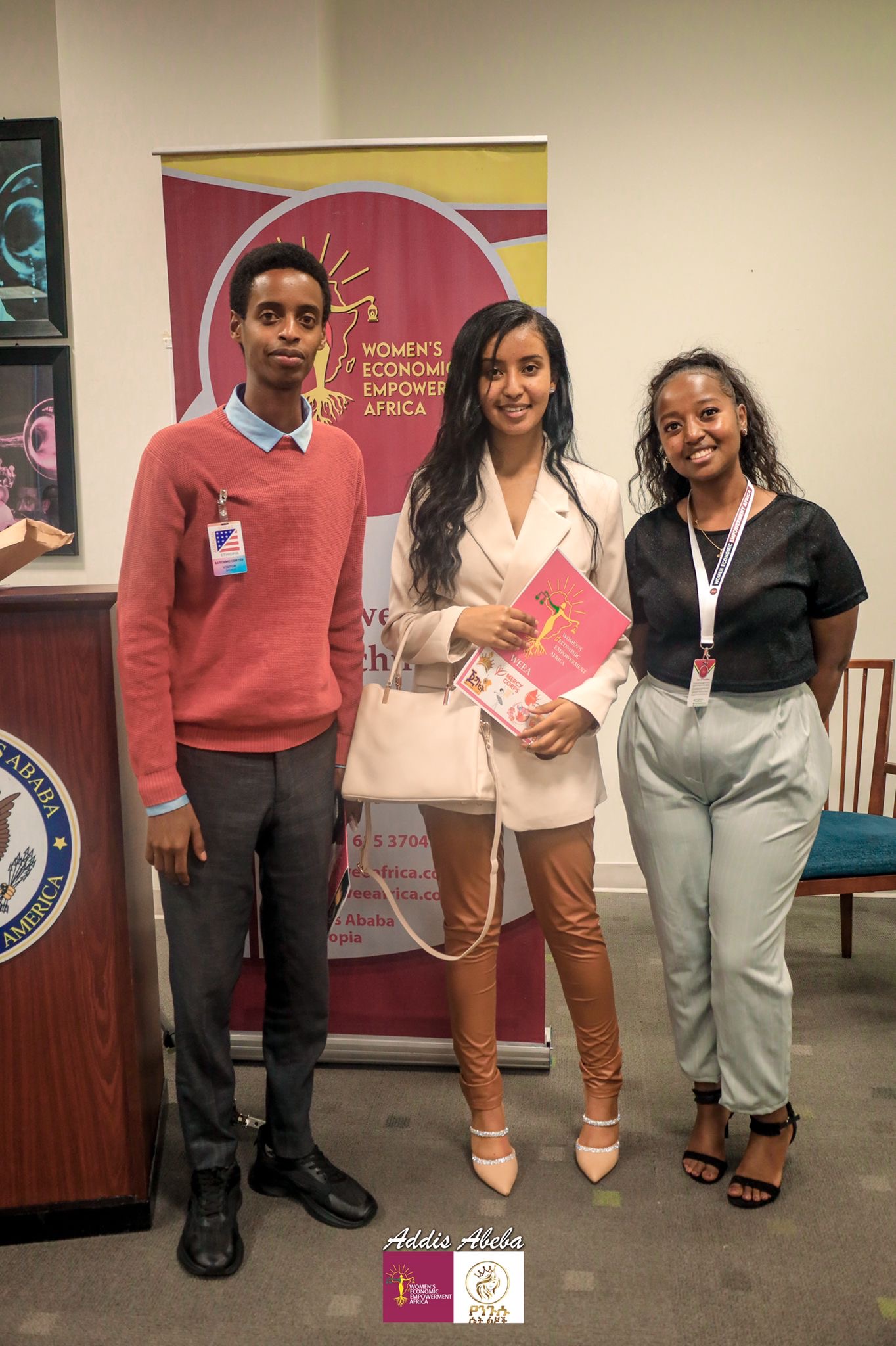
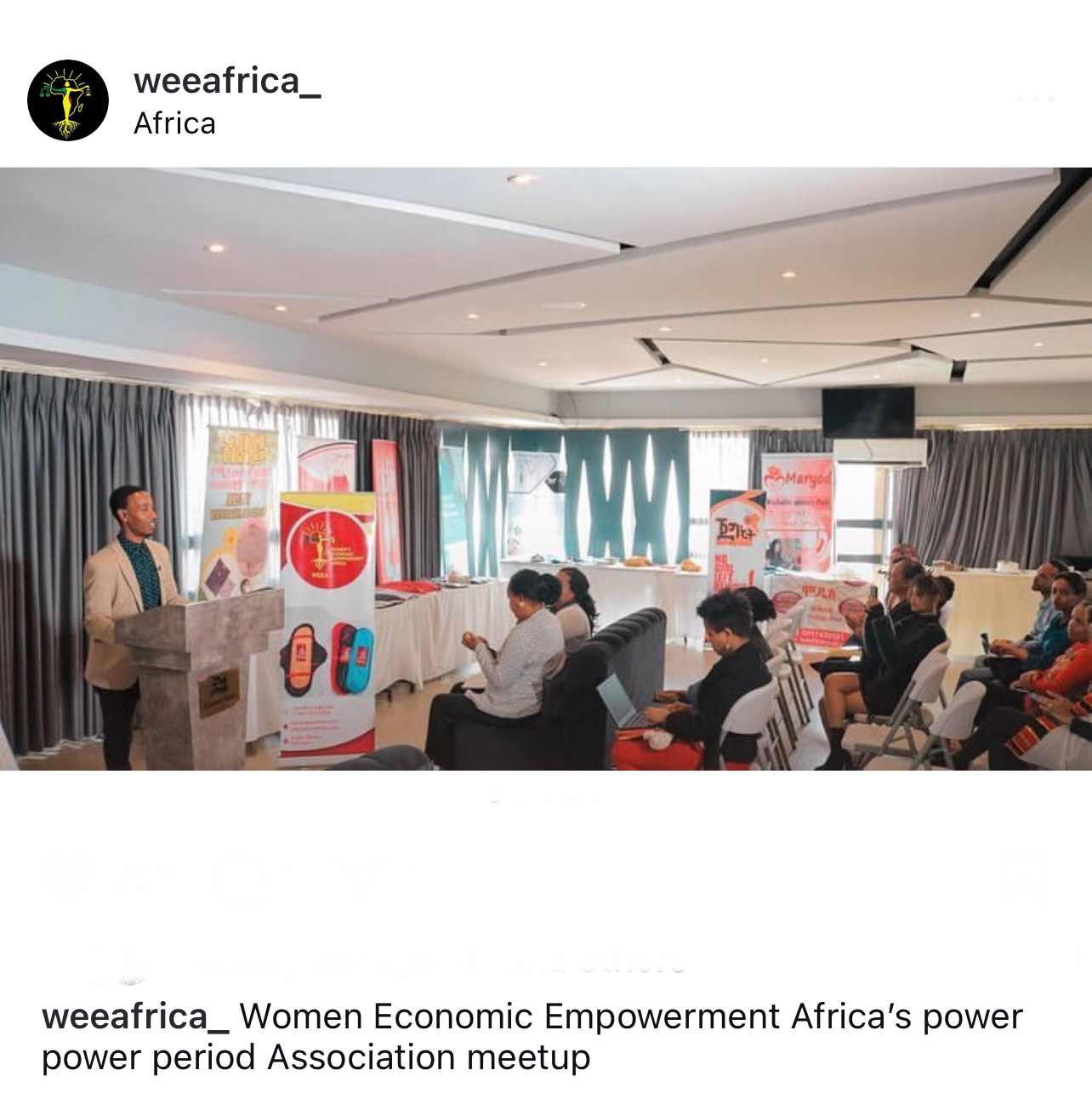
WEEA association meetup. WEEA photo archive.
WEEA’s work connects dialogue, practical resources and women’s participation. These images document an association meetup in WEEA’s activity archive.
WEEA’s governance includes a General Assembly of professionals committed to gender equality and women’s economic empowerment, and an elected Board of Directors responsible for direction and oversight.
WEEA connects women’s economic empowerment, education, dignity and youth leadership with the Sustainable Development Goals and African Union Agenda 2063 aspirations.
SDG 1 · No Poverty
Economic opportunities and sustainable livelihoods.
SDG 3 · Good Health and Well-being
Menstrual health information and community wellbeing.
SDG 4 · Quality Education
Girls’ education, practical skills and inclusive learning.
SDG 5 · Gender Equality
Equal opportunities, dignity and women’s participation.
SDG 6 · Clean Water and Sanitation
Menstrual hygiene and supportive environments.
SDG 8 · Decent Work and Economic Growth
Entrepreneurship, youth skills and economic participation.
SDG 9 · Industry, Innovation and Infrastructure
Priorities for local production and practical innovation.
SDG 10 · Reduced Inequalities
Inclusion of underserved and marginalized communities.
SDG 12 · Responsible Consumption and Production
Priorities for reusable menstrual products and sustainable production.
SDG 16 · Peace, Justice and Strong Institutions
Meaningful participation and institutional accountability.
SDG 17 · Partnerships for the Goals
Collaboration, knowledge exchange and shared development priorities.
Goal icons: United Nations Sustainable Development Goals. Not approved by the United Nations; this website does not reflect the views of the United Nations, its officials or Member States.
We envision communities where women and girls can access the information, resources, education, and opportunities they need to live with dignity and participate fully in society.
Achieving this future requires continued collaboration, practical action, public awareness, and sustained commitment to equality and empowerment.
WEEA will continue working with communities and partners to advance menstrual health, support girls’ education, promote women’s economic empowerment, and encourage sustainable solutions that respond to real needs.
We believe every step toward dignity and opportunity matters—and lasting progress is possible when we work together.